
Patient guide
Updated October 2026
If you have been told you may have venous insufficiency (a condition in which leg vein valves do not close well, so blood flows backward and pools), or you have been told to wear compression stockings, you may be wondering what it means and what happens next. Start with the symptoms you notice and the questions you want answered—not a decision about a procedure.
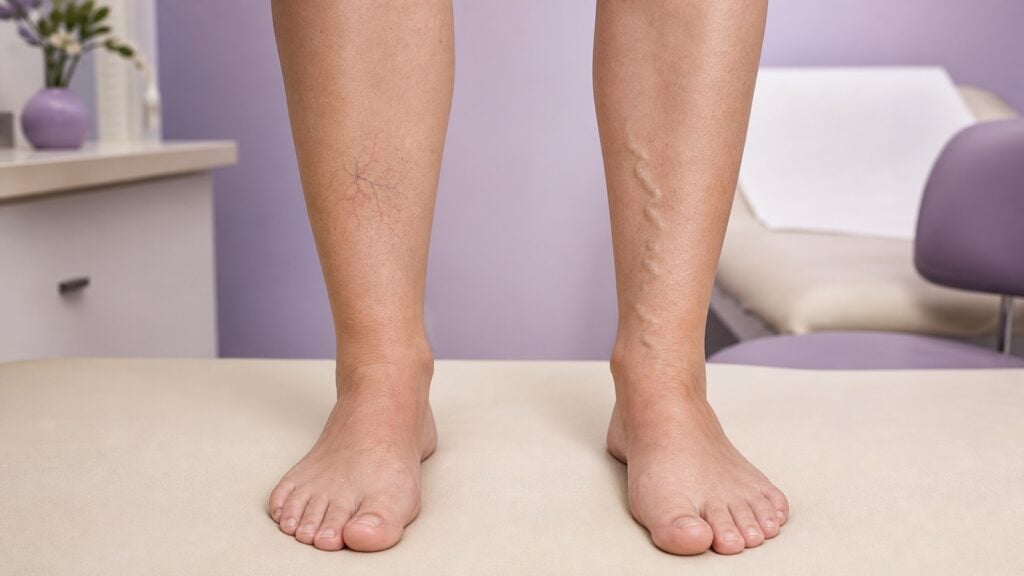
Venous insufficiency means the veins in the legs are not returning blood toward the heart as well as they should. Valves that do not close properly can allow blood to collect in the legs.
Chronic venous insufficiency (CVI) is a long-term problem with blood returning through the leg veins, commonly involving valves that are not working properly. Your evaluation is the place to ask what this diagnosis means for you.
You do not need to choose a procedure before asking for an evaluation. Describe what has been bothering you, how it affects your day, and what you would like to understand.
For the wider picture, explore the Conditions Saphena evaluates.
Symptom or change
What you may notice
What to tell your physician
Leg swelling
Aching or heaviness
Itching or irritated skin
Skin color or texture changes
A slow-healing sore
Visible veins
Use these examples to organize your questions, not to diagnose yourself.
Bring your main concern to the evaluation, even if it does not fit neatly into this list.
Leg swelling is not specific to venous insufficiency; it can have other causes. Ask for an assessment rather than assuming a vein procedure is the answer. See the guidance below when symptoms are new or concerning.
Skin changes or a sore that is slow to heal deserve medical assessment. If visible bulging veins are also a concern, explore Varicose Vein Treatment for the related evaluation and treatment discussion.
For symptoms that need prompt attention:
Seek medical care the same day for new or worsening leg swelling, pain or tenderness, warmth, or redness or discoloration in one leg. Call 911 for trouble breathing, chest pain (especially if it worsens with a deep breath or cough), coughing up blood, a fast or irregular heartbeat, lightheadedness, or fainting.Dr. Catherine Youssef, MD, reviews your symptoms and medical history and examines your legs before recommending next steps. The aim is to understand your concern before choosing a treatment.
When appropriate, duplex ultrasound (a painless ultrasound scan that shows the leg veins and which way blood flows in them) helps assess how blood moves through the veins, including reflux (blood flowing backward in a leg vein because its valves do not close well). For more about this part of the evaluation, see Treatments.
Venous insufficiency treatment depends on your symptoms, the size and location of the veins involved, and your health and goals. Procedures for selected surface veins do not suit every cause of venous insufficiency. Saphena offers the following in-office options when the evaluation shows they are appropriate.
Radiofrequency ablation and endovenous laser ablation: use heat delivered inside a vein and are designed to close the selected vein.
VenaSeal: uses medical adhesive and is designed to close a selected vein.
Varithena: is an injectable foam treatment designed to close selected veins.
Ultrasound-guided foam sclerotherapy and visually guided sclerotherapy: use injected medicine and are designed to close selected veins.
Walking, leg elevation, or compression stockings may be part of symptom management; ask which are appropriate for you. Procedures have risks, including bruising and blood clots, and the risks depend on the treatment, aftercare, and your health. Ask Dr. Youssef about expected benefits, risks, alternatives—including not having a procedure—follow-up, and any activity instructions before deciding. Saphena does not perform open vein surgery or hospital-based procedures; if surgery or another specialist is needed, Dr. Catherine Youssef, MD, will discuss a referral.
Ask what is causing your symptoms, what treatment would address, which alternatives fit, and what to expect afterward. If you would like an evaluation, call the clinic or request a callback. For coverage questions, see Insurance and your visit. We check your insurance benefits before your visit at no charge. Self-pay patients can ask for an estimate. We accept CareCredit and Cherry financing, and we can work with you on self-pay payment options if needed.
"Chronic" means the problem with blood returning through the leg veins is long-term.
A previous blood clot in the leg can contribute to chronic venous insufficiency.
Compression stockings gently squeeze the calf of the leg to support blood flow toward the heart and help reduce swelling.
Care may include movement, compression, or skin care, while some people need a procedure based on their symptoms and vein findings.
On this page


Dr. Youssef leads Saphena Vein Clinic & Wellness Center in Altamonte Springs. She holds an active Florida medical license (ME159975).
About Dr. Youssef →Call the Altamonte Springs clinic or request a callback to discuss your concerns and arrange an evaluation.