
Visible vein guide
Learn how spider veins and varicose veins differ in appearance and possible symptoms, and when a physician-led vein evaluation in Altamonte Springs may be appropriate. Appearance alone cannot diagnose an underlying vein problem.
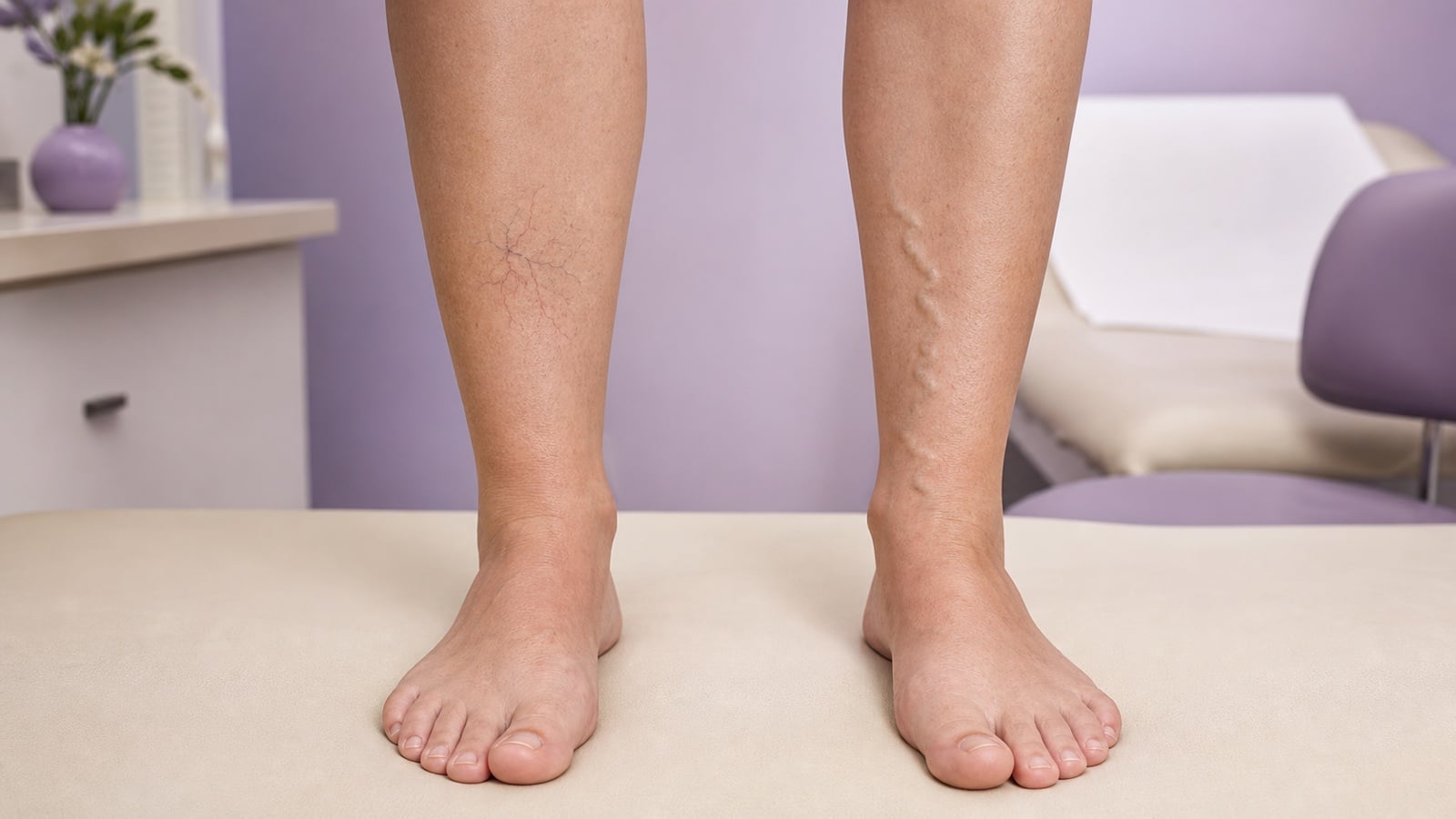
By Saphena Vein Clinic Editorial Team • Updated July 2026
Spider veins are small red, blue, or purple blood vessels close to the skin. They often look like fine lines or webs.
Varicose veins are larger veins that may look raised, twisted, or rope-like. They can occur with aching, heaviness, swelling, itching, tenderness, or throbbing.
Ultrasound is not automatic. Most uncomplicated spider or reticular veins without symptoms do not need routine duplex ultrasound. A clinician may consider ultrasound when there is bleeding, significant pain or burning, recurrence after prior treatment, or signs that a deeper vein problem may be present.
These descriptions are general, not a diagnosis. Review the vein conditions Saphena evaluates for more context.
| Factor | Spider veins | Varicose veins |
|---|---|---|
| Typical appearance | Fine red, blue, or purple lines that are usually flat and web-like | Larger blue or purple veins that may be raised, twisted, or rope-like |
| Common location | Near the skin’s surface, often on the thighs, calves, ankles, or face | Enlarged superficial veins, most often along the calf or thigh |
| Possible symptoms | Often no symptoms; some areas itch, burn, ache, or feel tender | Aching, heaviness, throbbing, itching, tenderness, or swelling can occur |
| Connection to backward blood flow | May be isolated or connected to nearby feeding veins. Appearance alone does not show whether blood is flowing backward. | May develop when vein valves do not move blood upward efficiently and blood flows backward. |
| When ultrasound can help | Usually not needed for uncomplicated, symptom-free spider or reticular veins. It can clarify a suspected deeper circulation problem after the history and exam. | Can show backward flow or a blockage when the history and standing exam suggest an underlying circulation problem. |
| Possible next step | Observation or a discussion of surface-vein treatment, depending on symptoms and goals | Clinical evaluation, possible duplex ultrasound, and a treatment discussion when indicated |
These are common patterns, not a diagnosis. A small surface vein can cause discomfort, while a prominent varicose vein can cause little trouble. A physician combines the history, standing exam, and any clinically useful testing before recommending a next step.
Many spider veins are noticed because of appearance, but some areas itch, burn, ache, or feel tender after long periods of standing. During an evaluation, a clinician can inspect the pattern while you’re standing and ask when it appeared, whether it changes through the day, and whether swelling or skin changes occur nearby. If the concern is limited to an isolated, asymptomatic cluster, a visual exam can be sufficient. If the history raises concern for deeper vein disease, duplex ultrasound can show blood flow that can’t be judged from the skin. You can review Saphena’s vein treatment options before a visit.
Varicose veins are enlarged superficial veins, most often in the legs. When one-way valves don’t work efficiently, blood can pool and increase pressure in the vein. Some people notice heaviness late in the day, aching after standing, throbbing, itching, night cramps, or swelling near the ankle. Skin that becomes darker, firm, irritated, or slow to heal deserves medical attention. If these changes affect walking, work, exercise, or sleep, the insurance and visit guide explains how to prepare and why coverage varies by plan and medical-necessity criteria.
Some concerns can wait for a routine vein appointment. Others need prompt or emergency care.
This guidance cannot identify the cause of symptoms. Sources: CDC: About Venous Thromboembolism, NHLBI: Varicose Veins, and International Union of Phlebology: Management of bleeding varicose veins.
Saphena’s physician-led evaluation connects the visible finding with your symptoms and circulation.
Before your visit, you can meet the physician who leads care at Saphena.
See how in-office options differ before you discuss a personalized plan.
Not every visible vein needs treatment. When treatment is appropriate, the plan depends on your symptoms, medical history, exam, vein anatomy, and goals. Sclerotherapy uses an injection to close a small targeted vein. It may be considered for spider veins and some small varicose veins. Treatment for larger veins with backward blood flow may include endovenous ablation, which uses heat to close a targeted vein, or treatment with a medical adhesive or injectable foam. After a targeted surface vein closes, blood is expected to reroute through other working veins. Compression stockings, walking, and leg elevation may help symptoms, but they do not correct the underlying valve problem. Coverage varies by plan. Some plans require documented symptoms, ultrasound findings, a trial of conservative care, or prior authorization. Treatment for appearance alone may not be covered. If you would like to discuss the next step, request an evaluation.
Saphena offers physician-led vein care. Learn about Catherine Youssef and the clinic’s approach on the profile page linked below. This article cannot replace an individual medical evaluation. Ask who will evaluate you, interpret any ultrasound, recommend an option, perform any procedure, and provide follow-up.

No. Spider veins are usually small, flat vessels near the skin. Varicose veins are larger, enlarged veins that may bulge or twist. Either type can be evaluated if it causes symptoms, bleeding, skin changes, or concern.
No. Most uncomplicated spider or reticular veins without symptoms do not need routine ultrasound. Your history and standing exam help the clinician decide whether the test would add useful information.
Schedule a routine evaluation for recurring aching, heaviness, swelling, itching, tender veins, skin changes, or visible veins that concern you. New one-sided swelling with pain or tenderness, warmth, or skin color change needs prompt evaluation. Trouble breathing, chest pain, coughing up blood, fainting, or active vein bleeding needs emergency help. Call 911.
Depending on your symptoms, exam, and ultrasound findings, options may include observation, compression, sclerotherapy for smaller veins, or a procedure that closes a larger problem vein with heat, medical adhesive, or injectable foam. The clinician should explain the expected benefits, risks, and reasons an option may not be appropriate for you.
Coverage varies by plan and isn’t automatic. Ask your insurer whether its medical-necessity rules require symptom records, conservative care, or prior authorization. Services requested only for appearance may be excluded.
Call the Altamonte Springs clinic to request a vein evaluation.
Review common symptoms and visible changes associated with vein concerns.
Review the treatment categories Saphena currently describes and the role of clinical evaluation.
See appointment preparation and conditional coverage information.