
Patient guide
Leg heaviness, swelling, aching, or visible veins can raise a simple question: who should evaluate this? This guide explains what the word phlebologist means, what happens during a vein evaluation, and which symptoms should not wait for a routine appointment.
By Saphena Vein Clinic Editorial Team • Updated July 2026
Phlebology is the field of medicine focused on vein conditions. A phlebologist is a physician whose work focuses on diagnosing and treating vein disorders. People also use the terms vein doctor and vein specialist.
Other qualified clinicians may participate in vein care. Roles, licenses, board certification, training, and experience can vary, so it is reasonable to ask who will evaluate you, who performs any procedure, and what training that person has.
Vein-focused clinicians commonly evaluate varicose veins, spider veins, leg swelling, heaviness, aching, throbbing, itching, and skin changes near the ankle. They also consider whether a symptom could have another cause.
Visible veins are only one part of the evaluation. Some people have prominent veins with few symptoms. Others have discomfort or swelling without a large surface vein. A focused history and exam help the clinician decide whether vein circulation may be involved and whether another type of medical care is more appropriate.
Learn more: vein symptoms and conditions.
A routine vein appointment is not the right first step for every symptom. New swelling, pain or tenderness, warmth, or redness or discoloration in one leg can be signs of a deep vein thrombosis. Contact a medical professional promptly for guidance.
Trouble breathing, chest pain, coughing up blood, a fast or irregular heartbeat, lightheadedness, or fainting can be signs of a pulmonary embolism. Call 911 or seek emergency care immediately.
These symptoms can have more than one cause. Bring up what you feel, when it happens, and what makes it better or worse.
Restless legs and night cramps can be important to mention, but they are not specific to vein disease.
The goal of the first visit is to understand the problem before discussing a procedure.
Catherine Youssef, MD
Physician; active Florida medical license ME159975
The Florida Department of Health license record lists Dr. Youssef at an Altamonte Springs practice address. Patients can review her license status and ask who will evaluate them, who performs any procedure, and what training that person has.
A practice focus is not the same thing as a board certification. This page does not make a board-specialty claim.

Search results often use phlebologist, vein doctor, and vein specialist as if they mean exactly the same thing. A few direct questions reveal more than the label.
Insurance coverage depends on the plan, symptoms, clinical findings, documentation, and medical-necessity rules. Some plans require conservative measures or prior authorization. Coverage cannot be promised before the plan's requirements are checked.
If you schedule a visit, bring your medication list, relevant medical history, insurance information, and a short note about when your leg symptoms occur. Photos taken when swelling or color changes are most noticeable may also help the conversation.
Learn more: insurance and your visit, vein treatment options.
People often use phlebologist, vein doctor, and vein specialist for a clinician whose work focuses on vein conditions. The label does not establish one uniform training path, so check the clinician’s license, training, and experience.
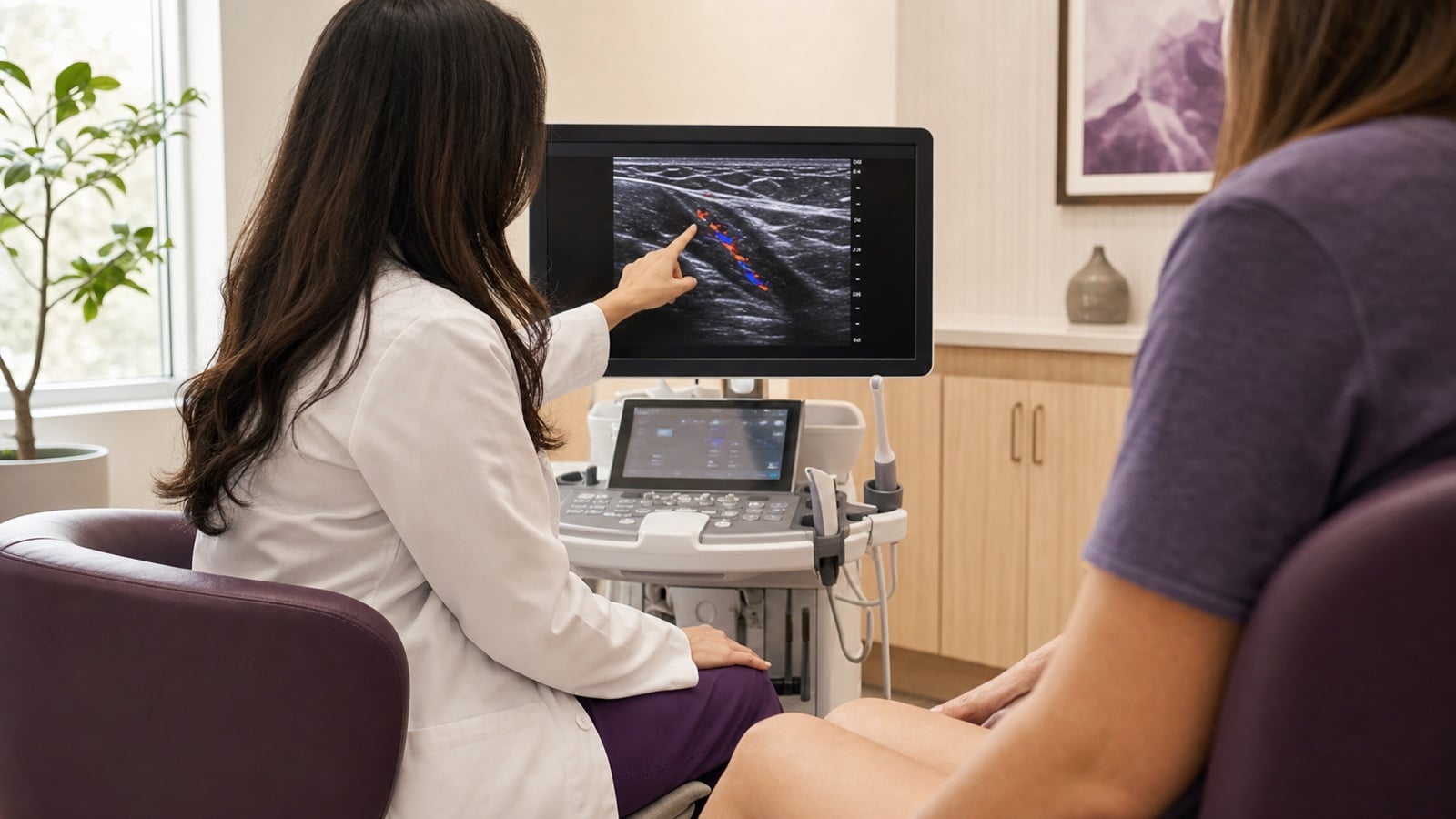
Not everyone needs the same testing. A clinician may recommend duplex ultrasound when your symptoms and exam suggest venous reflux or another issue that the scan can help evaluate.
A vein-focused clinician can assess spider veins and discuss cosmetic options. If you also have aching, swelling, heaviness, or skin changes, ask whether a medical evaluation should come first.
Many vein procedures can be performed in an office for an appropriate patient. The setting and option depend on the diagnosis, anatomy, medical history, risks, and treatment plan.
Coverage varies. Plans may consider symptoms, exam and ultrasound findings, documentation, conservative-care history, referrals, and prior authorization. The clinic can help you understand the process, but the insurer makes the coverage decision.
Seek prompt medical guidance for new one-sided swelling, pain or tenderness, warmth, or color change. Call 911 or seek emergency care for trouble breathing, chest pain, coughing blood, lightheadedness, or fainting.
Call Saphena Vein Clinic or request an evaluation in Altamonte Springs. For sudden or severe symptoms, use the urgent-care guidance above.
Review common symptoms and the conditions a vein evaluation may consider.
Review general vein treatment information and the role of evaluation.
Read about Dr. Youssef’s background and credentials.